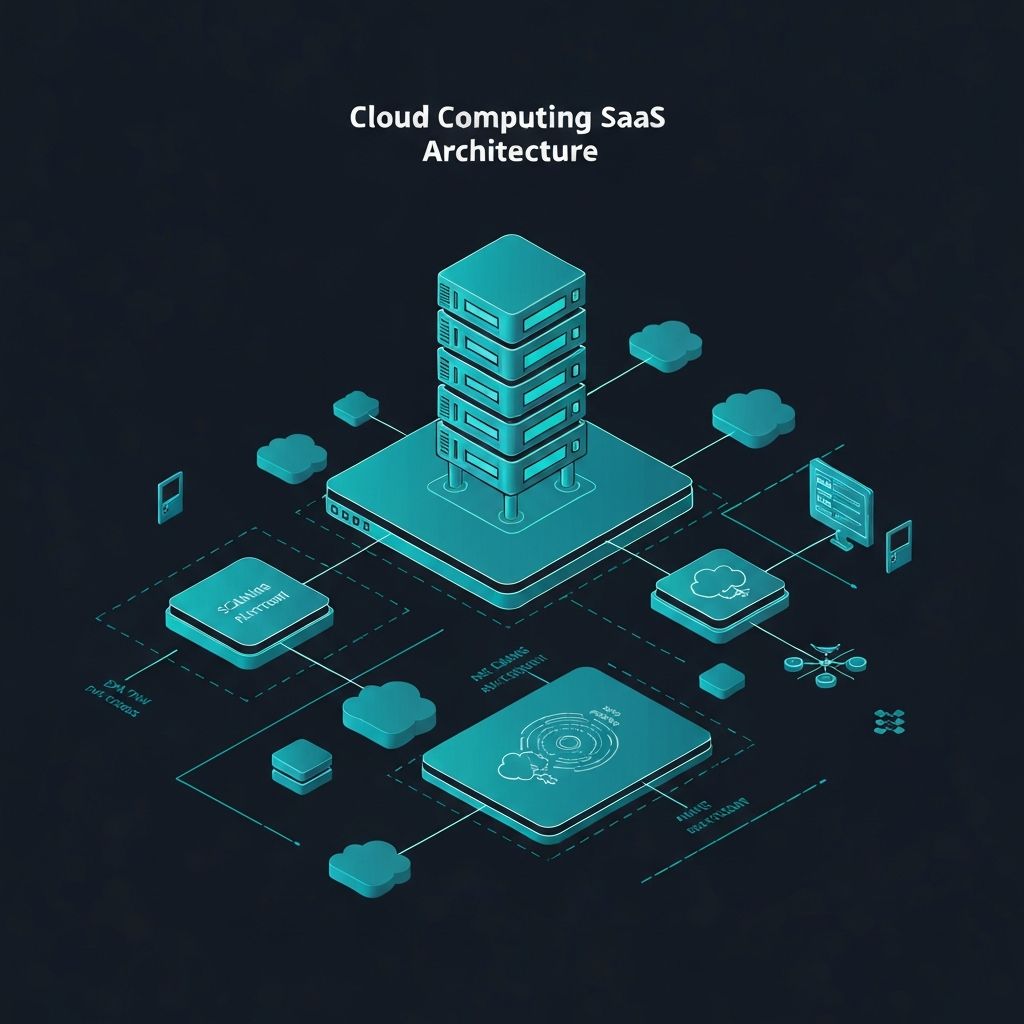
Building a SaaS platform that can scale from serving a handful of early adopters to thousands of enterprise customers is one of the most challenging endeavors in software engineering. At Inkorve, we've helped numerous clients navigate this journey, and we've distilled our learnings into a set of architecture best practices that can mean the difference between success and failure.
The Foundation: Multi-Tenancy Architecture
The most fundamental decision in SaaS architecture is how to implement multi-tenancy. There are three primary approaches, each with its own tradeoffs:
Shared Database, Shared Schema
All tenants share the same database and tables, with a tenant identifier column distinguishing data. This approach offers the lowest cost and simplest management but requires careful attention to data isolation and can present scaling challenges.
Shared Database, Separate Schemas
Each tenant gets their own schema within a shared database. This provides better isolation while maintaining reasonable resource efficiency. It's often the sweet spot for mid-sized SaaS applications.
Separate Databases
Each tenant has a completely isolated database. This offers maximum isolation and customization potential but at higher operational cost and complexity.
Microservices: When and How
The microservices architecture pattern has become synonymous with scalable SaaS, but it's not always the right choice from day one. We recommend starting with a modular monolith—a well-structured application with clear boundaries between components that can be extracted into services later.
When transitioning to microservices, consider these principles:
- Domain-Driven Design: Define service boundaries based on business domains, not technical layers.
- API-First Design: Design your service interfaces before implementation, ensuring clear contracts.
- Event-Driven Communication: Use asynchronous messaging for cross-service communication to improve resilience.
- Centralized Observability: Implement distributed tracing, centralized logging, and metrics from the start.
Database Strategies for Scale
Data layer scalability often becomes the bottleneck in growing SaaS platforms. Here are strategies we've successfully implemented:
Read Replicas
Offload read traffic to replica databases, significantly reducing load on the primary database. This is often the first scaling step and can provide 3-5x capacity improvement.
Sharding
Distribute data across multiple database instances based on a shard key (often tenant ID). This allows horizontal scaling but adds complexity to queries spanning shards.
Caching Layers
Implement Redis or similar caching solutions for frequently accessed data. A well-designed caching strategy can reduce database load by 80% or more.
The API Layer
Your API is the contract with your customers. Design it for longevity:
- Versioning Strategy: Plan for API evolution with clear versioning from day one.
- Rate Limiting: Protect your infrastructure and ensure fair usage across tenants.
- GraphQL Consideration: For complex data relationships, GraphQL can provide flexibility while reducing over-fetching.
- Documentation: Invest in comprehensive, automatically generated API documentation.
Infrastructure as Code
Managing infrastructure manually doesn't scale. From the beginning, define your infrastructure using tools like Terraform or Pulumi. This enables:
- Reproducible environments
- Version-controlled infrastructure changes
- Easier disaster recovery
- Consistent development, staging, and production environments
Security Considerations
Security in multi-tenant environments requires extra vigilance:
- Data Isolation: Ensure tenant data can never leak across boundaries through rigorous testing.
- Authentication: Implement robust identity management with support for enterprise SSO.
- Encryption: Encrypt data at rest and in transit, with tenant-specific encryption keys for sensitive industries.
- Compliance: Build compliance requirements (SOC 2, GDPR, HIPAA) into your architecture from the start.
Conclusion
Building a scalable SaaS platform is a marathon, not a sprint. Start with solid foundations, make deliberate architectural decisions, and build with scale in mind—even if you don't need it yet. The organizations that succeed are those that can grow their technical capabilities alongside their customer base.